
Magnetic latching relays significantly improve system reliability and longevity by maintaining their switched state without continuous coil power. This results in lower thermal stress, reduced mechanical wear, and improved energy efficiency, all of which contribute to stable long-term operation in demanding electrical systems.
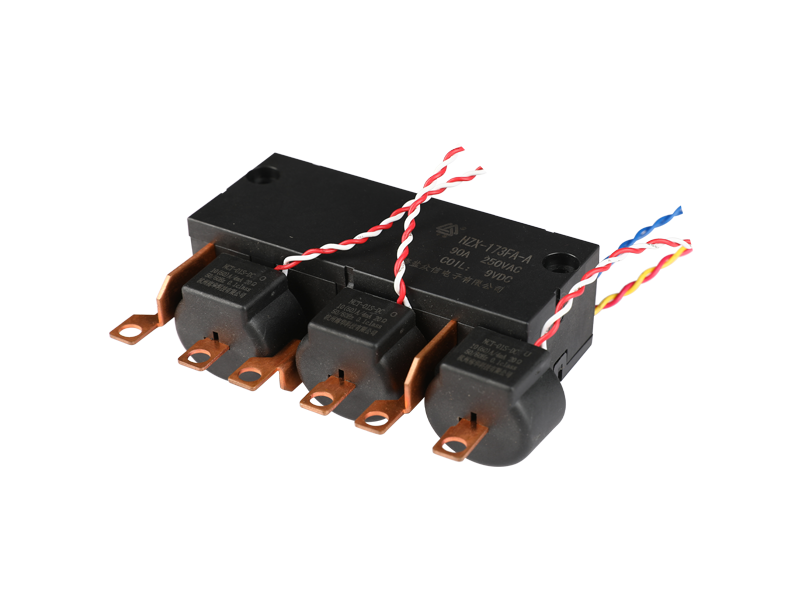
A magnetic latching relay uses a permanent magnet mechanism to hold its contact position after being switched. Unlike conventional relays, it only requires a short pulse of current to change state.
This design eliminates the need for continuous coil energization, allowing the relay to “latch” in either the ON or OFF position until the next control signal is applied.
Reliability is improved primarily through operational stability and reduced energy dependency. Since the relay does not require constant power, the system becomes less vulnerable to coil overheating and power fluctuations.
The lifespan of a relay is strongly influenced by thermal load and mechanical switching frequency. Magnetic latching relays reduce both factors, extending service life.
Because energy is only required during switching, magnetic latching relays contribute to significantly lower overall power consumption in control systems.
Reduced energy use also translates into lower thermal accumulation, which helps maintain stable operating conditions in compact or enclosed systems where heat dissipation is limited.
While inherently reliable, performance depends on proper design integration and environmental conditions.
Magnetic latching relays are widely used in systems where consistent state retention and energy efficiency are essential.
| Feature | Magnetic Latching Relay | Conventional Relay |
|---|---|---|
| Power Requirement | Only during switching | Continuous during ON state |
| Thermal Load | Low | Higher due to constant energization |
| Mechanical Wear | Reduced | Higher over long operation |
| State Retention | Yes (without power) | No |

Copyright © 2015-2021, Zhejiang Zhongxin New Energy Technology Co., Ltd. All rights reserved Technical Support:Smart cloud Electromagnetic Relay Manufacturers China Relays Factory


 English
