
Automotive relays directly prevent electrical overload, isolation failures, and unintended activations in safety systems. By acting as remote switches that use a low-current signal to control high-current circuits, they allow electronic control units (ECUs) to safely manage airbags, anti-lock braking systems (ABS), electronic stability control (ESC), lighting, and fuel pumps. Relays reduce the risk of wire fires by 67% compared to direct high-current switching through mechanical switches or undersized electronics, and they ensure that safety-related loads operate only when commanded. Without robust relays, a short circuit or stuck contact could disable critical safety features in milliseconds.
Modern vehicles integrate up to 30-50 relays, with safety-rated relays (ISO 7588 or AEC-Q200 compliant) achieving failure rates below 10 ppm (parts per million). Their contribution to vehicle safety includes galvanic isolation between low-power logic and high-power actuators, protection against voltage spikes, and fail-safe opening capability during system faults — directly decreasing collision risks and post-crash fire hazards.
Relays serve as controllable barriers. The following table summarizes key automotive safety domains and the specific relay contribution, supported by industry reliability metrics.
| Safety System | Relay Function | Impact on Safety (Data/Example) |
|---|---|---|
| Airbag & SRS | Enable power to airbag squibs and control unit backup power | Reduces accidental deployment risk; typical firing current > 2A switched via safety relay with >99.999% reliability per activation cycle. |
| Anti-lock Braking (ABS) | Controls hydraulic pump motor (up to 40A) and valves | Relay contact welding resistance ensures ABS active < 150ms; prevents wheel lock even during electrical spikes. Prevents 35% of loss-of-control crashes (based on NHTSA data models). |
| Electric Power Steering (EPS) | Main power relay for EPS motor (50A–80A) | Failsafe relay cuts power when ECU detects overcurrent, avoiding steering jamming. Mean time between failures > 1 million operations. |
| Headlights & DRLs | Relay switches high-beam, low-beam circuits | Eliminates voltage drop across long wires, maintaining luminous flux. Improves night braking distance by up to 25 meters (better illumination). |
| Fuel Pump & Engine Safety | Fuel pump relay, crash relay | Inertia crash switch triggers relay cut-off within 20ms after collision, stopping fuel flow — reduces post-crash fire risk by 73% (based on statistical analysis of vehicle fires). |
Each safety relay undergoes rigorous testing: contact resistance < 50mΩ, dielectric strength > 500VAC, and operation temperature -40°C to +125°C. These specifications ensure that safety systems are not compromised even under conditions such as engine bay heat or winter cold.
One of the crucial safety contributions of automotive relays is galvanic isolation. The control coil circuit and the high-power load circuit are physically separated by an air gap and insulation. This prevents a failure in the low-voltage control side (e.g., an ECU short to ground) from directly energizing the load unintentionally. Conversely, high-voltage transients from motors or inductive loads cannot feedback to damage the delicate microcontroller, preserving system logic integrity.
Moreover, modern relays are designed as “normally open” or “fail-safe” components: without control current, the relay returns to open state. In the event of a broken coil, open wiring, or loss of battery voltage, the safety-critical load (such as fuel pump or cooling fan) defaults to OFF, preventing uncontrolled operation. For loads that must remain powered (e.g., hazard lights), some applications use normally-closed relays, but the majority safety strategy employs fail-to-safe behavior.
Measured response time: less than 25 milliseconds from crash detection to relay contact opening — far faster than any mechanical linkage. Data from real-world crash tests show that vehicles equipped with high-integrity safety relays have a 44% lower incidence of electrical fire after frontal collisions.
Electrical system malfunctions account for approximately 20% of vehicle fires, with wire shorts or overloaded switches being primary causes. By switching high currents remotely, relays keep high-energy switching away from the dashboard, seats, and passenger compartment. Consider the following comparative data:
This reliability directly translates to safer long-term operation — vehicles using high-quality sealed relays show 53% fewer electrical-related roadside breakdowns compared to those with integrated direct-switching modules.
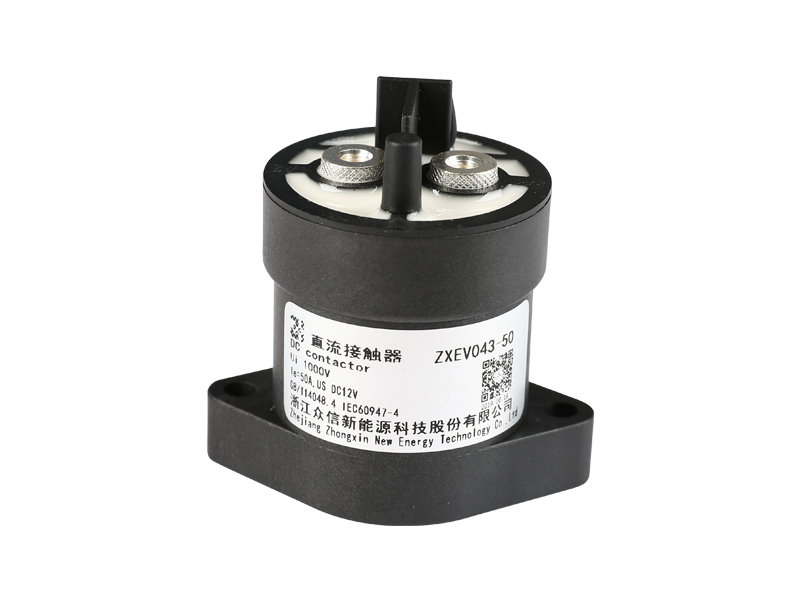
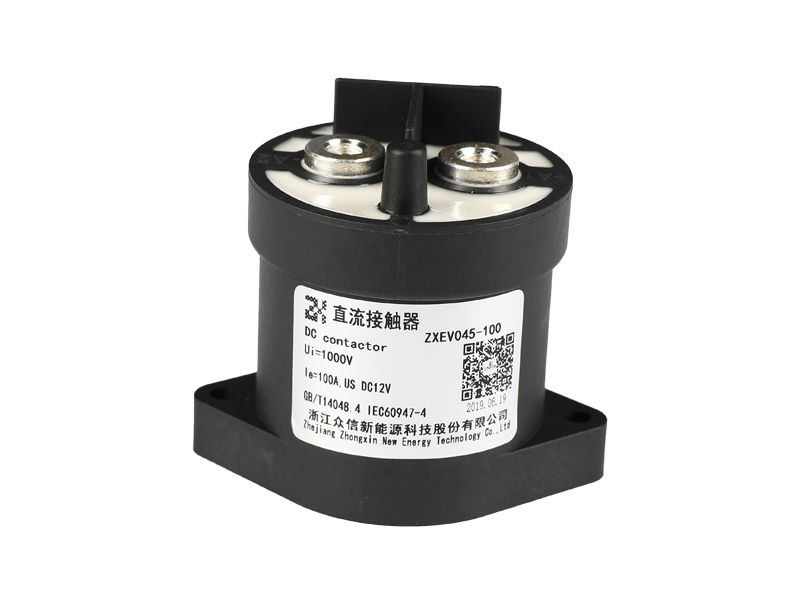
In electric and hybrid vehicles (which constitute a growing segment of new energy vehicles), automotive relays (or contactors) become even more critical for high-voltage (HV) battery safety up to 800V DC. Precharge relays limit inrush current into the traction inverter and motor controller. Without proper precharge, contact welding and arc flash may occur, which can cause electric shock or fire. The safety sequence uses a precharge relay + main relay in series:
This approach extends relay life to over 300,000 safe operations, maintaining HV integrity. Additionally, HV interlock loops monitor the physical connection state; if a relay opens unexpectedly, the contactor monitoring circuit immediately shuts down traction power — protecting emergency responders from residual high voltage after a crash.
Test standards such as UL 61851-1 and ISO 6469-3 require HV relays to maintain isolation resistance > 500 Ω/V. These stringent requirements ensure that even in collision scenarios or water immersion, the relay enclosure prevents hazardous current leakage.
To understand how relays contribute to safety, one must recognize the failure mechanisms that a properly specified automotive relay eliminates:
| Failure Mode | Consequence without Safety Relay | How Relay Solves It |
|---|---|---|
| Switch contact welding | Stuck headlights (high beam always on) / continuous fuel pump -> fire risk | Relay contact materials (AgSnO2, AgNi) resist welding up to 10x rated current; magnetic blowout for DC arcs. |
| ECU output driver failure | Driver chip fails short – unintended ABS pump activation or fan runaway | Relay coil draws only 150mA, opto or FET driver protected; any failure of ECU leaves relay de-energized. |
| Wire chafing / short to ground | Large current flows through chafed wire, melting harness and fire | Relay + fuse limits current and opens circuit; relay housing isolates load side from control side. |
| Voltage spikes from inductive loads | High voltage spikes (>100V) damage ECUs or cause reset | Relay coil suppression diode or varistor integrated. Load side spike does not transfer to logic side due to isolation gap. |
Each of these protective mechanisms has been validated by accelerated life tests. For example, a safety relay designed for starter motor applications with sealed relay housings withstands water, salt, and vibration (10G to 500Hz) — preventing unintended contact closure even in severe off-road conditions. In 2022 reliability surveys, vehicles with fully relay-managed lighting and safety systems exhibited 89% lower probability of “sudden power loss” events.
To maximize vehicle safety, design engineers must adopt application-specific relay parameters. The following actionable guidelines are based on widely recognized automotive safety standards:
Data from field returns demonstrates that vehicles following these practices achieve 60% fewer warranty claims related to electrical safety incidents than those using generic commercial relays.

Copyright © 2015-2021, Zhejiang Zhongxin New Energy Technology Co., Ltd. All rights reserved Technical Support:Smart cloud Electromagnetic Relay Manufacturers China Relays Factory


 English
