
Magnetic latching relays have gained popularity in recent years due to their ability to consume low amounts of power while providing reliable switching capabilities. As industries strive for more energy-efficient solutions, these relays have proven to be a choice for applications where power efficiency is a top priority.
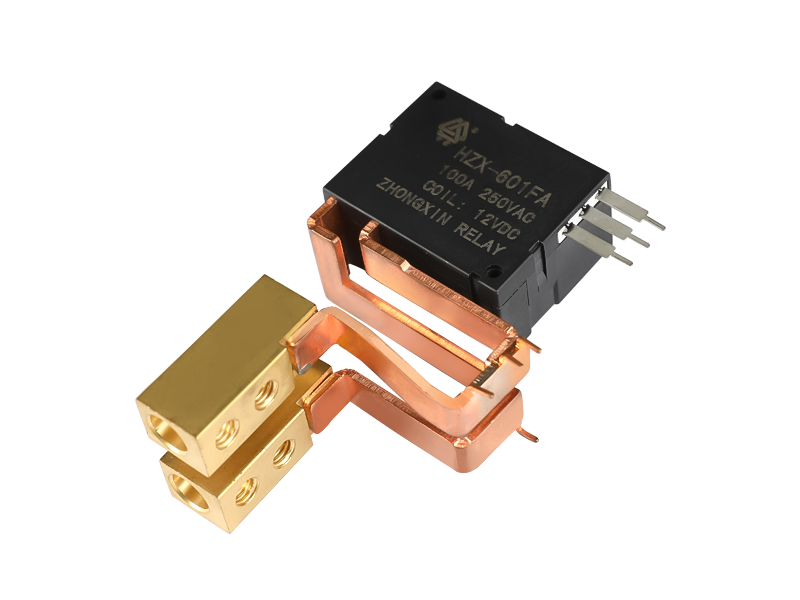
A magnetic latching relay is a type of relay that uses a magnetic field to maintain its position without requiring continuous power. Unlike traditional relays, which need constant energy to keep the switch in a particular state, magnetic latching relays only require energy to switch between states. This inherent characteristic allows them to consume very little power during operation, making them highly energy-efficient.
Magnetic latching relays utilize an electromagnet to latch the relay’s contacts into a given position. When power is applied, the relay switches to a different state. After this initial switch, no further power is required to keep the relay in that state, thanks to the magnetic field that holds the contacts in place. This process significantly reduces energy consumption when compared to conventional relays.
Power is Applied: The electromagnet causes the relay to switch from one state to another.
Magnetic Field Retention: Once the switch occurs, the magnetic field keeps the relay in the new state without continuous power.
Switching Back: A brief power pulse in the opposite direction will switch the relay back to its original state.
This latching mechanism is what sets magnetic latching relays apart from traditional relays that rely on continuous current to stay in a particular state.
In modern electronics, energy efficiency is critical. Devices and systems are becoming smaller, smarter, and more energy-conscious. The demand for components that consume minimal energy has led to the adoption of various low-power technologies, and magnetic latching relays are a choice in this context.
Magnetic latching relays outperform traditional relays in several key aspects, especially in terms of power consumption and longevity. While traditional relays require continuous power to maintain their state, magnetic latching relays only need power for the switching action.
| Feature | Magnetic Latching Relay | Traditional Relay |
|---|---|---|
| Power Consumption | Very Low (Only during switching) | High (Continuous power required) |
| Energy Efficiency | Excellent | Moderate to Low |
| Durability | High due to low wear | Moderate to Low |
| Switching Speed | Moderate to Fast | Fast |
| Maintenance | Low | High (due to wear and tear) |
This table clearly highlights the advantages of magnetic latching relays, particularly in energy efficiency and longevity.
Magnetic latching relays are used in various applications where energy conservation is a priority. They are particularly useful in systems where devices must maintain a state without constant power, such as in remote control systems, home automation, and battery-powered electronics.
There are several advantages that magnetic latching relays provide, especially in terms of energy savings and system efficiency.
Choosing the right magnetic latching relay depends on several factors such as the voltage rating, current capacity, and switching speed. It’s essential to match the relay specifications with the requirements of your system to ensure performance and efficiency.
Magnetic latching relays offer significant advantages in low-power applications. Their ability to maintain a state without continuous power makes them ideal for energy-efficient systems. By understanding how these relays work and the benefits they provide, businesses and engineers can make informed decisions about incorporating them into their designs, ultimately contributing to energy savings and improved sustainability.
1. What is the main benefit of using a magnetic latching relay?
Magnetic latching relays consume power only when switching between states, making them highly energy-efficient compared to traditional relays that require constant power to maintain their position.
2. Are magnetic latching relays more durable than traditional relays?
Yes, magnetic latching relays are more durable because they have fewer moving parts during standby, reducing wear and tear over time.
3. In what types of devices are magnetic latching relays typically used?
They are commonly used in battery-operated systems, smart home devices, automotive applications, and energy-efficient appliances.
4. How do magnetic latching relays contribute to sustainability goals?
By using less power and reducing the need for heat management systems, magnetic latching relays help reduce overall energy consumption, contributing to a greener, more sustainable environment.
5. What factors should be considered when selecting a magnetic latching relay?
Important factors include voltage rating, current handling capacity, switching speed, and compatibility with the system’s energy requirements.


Copyright © 2015-2021, Zhejiang Zhongxin New Energy Technology Co., Ltd. All rights reserved Technical Support:Smart cloud Electromagnetic Relay Manufacturers China Relays Factory


 English
