
A contactor that arcs instead of breaking cleanly can damage a battery pack, a charging station, or an entire energy storage cabinet in a single switching event, which is why high voltage direct current contactors are engineered around arc suppression first and everything else second.
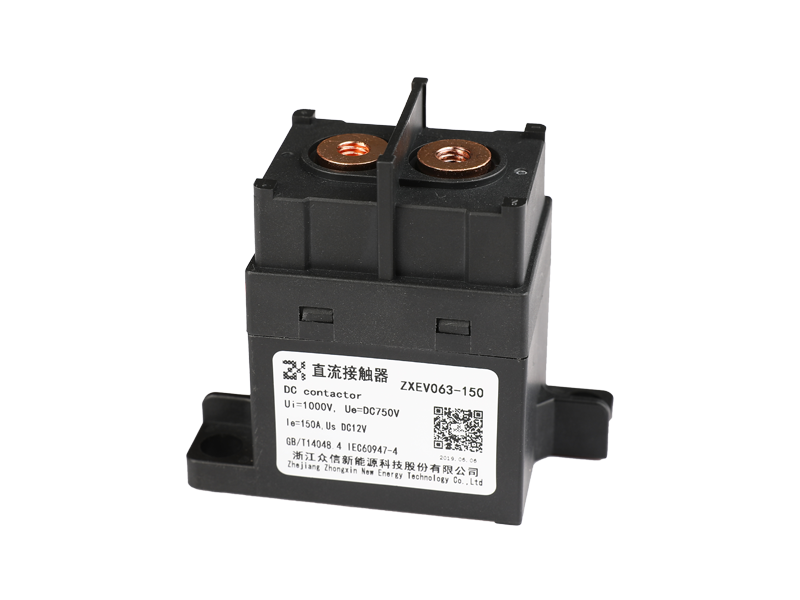
High voltage direct current contactors are electrically controlled switching devices built to connect and disconnect high-voltage DC circuits safely, a task that is fundamentally harder than switching AC power. Because direct current never naturally crosses zero the way alternating current does, DC switching requires dedicated arc suppression technology and reinforced insulation to interrupt current without sustaining a damaging arc. Common categories include main contactors, auxiliary contactors, and sealed contactors built for battery packs and charging systems.
Four parameters determine whether a contactor is actually rated for your system, regardless of what the product name suggests.
Traditional contactors switch general electrical loads; DC contactors are engineered around one specific, harder problem.
| Factor | High Voltage DC Contactors | Traditional Contactors |
| Arc Handling | Dedicated DC arc suppression design | Relies on natural AC current zero-crossing |
| Insulation | Reinforced for high-voltage isolation | Standard insulation for general use |
| Typical Use | EVs, battery storage, charging systems | General industrial electrical equipment |
| Maintenance | Low, with sealed and durable designs | Depends on operating environment |
A qualified high voltage direct current contactors supplier should provide high-voltage withstand test results, switching endurance data, and temperature rise figures for the exact model under consideration, not a general product family datasheet. Confirm these figures were tested at your system's actual voltage and current before specifying the part into a design.
Also evaluate whether the manufacturer supports custom terminal design, mounting structure, and communication functions, since battery, charging, and industrial automation systems rarely share identical integration requirements.
AC current crosses zero many times per second, which naturally helps extinguish a switching arc, while DC current stays constant, so a standard AC contactor lacks the arc suppression needed to break a DC circuit safely.
Most industrial and EV-grade contactors are rated between 400V and 1500V DC, depending on the battery, energy storage, or charging system they are designed for.
Mechanical endurance ratings commonly reach several hundred thousand switching cycles, though actual service life depends on switching frequency and load current in the specific application.
Yes, manufacturers commonly offer customization for voltage range, current capacity, terminal design, and communication functions to match a specific battery pack or energy storage platform.

Copyright © 2015-2021, Zhejiang Zhongxin New Energy Technology Co., Ltd. All rights reserved Technical Support:Smart cloud Electromagnetic Relay Manufacturers China Relays Factory


 English
