
In the evolving field of electrical control and automation, the magnetic latching relay has become a key component driving efficiency and reliability. Unlike conventional relays, it requires only a short pulse signal to switch states and consumes no continuous power to maintain its position. This unique design not only aligns with global energy-saving goals but also creates opportunities for applications in smart meters, building automation, and industrial control systems.
The defining feature of a magnetic latching relay is its bistable structure. Instead of drawing current continuously, it holds its contact position through magnetic force. Once switched, the relay remains either open or closed without further energy input.
This characteristic provides significant benefits:
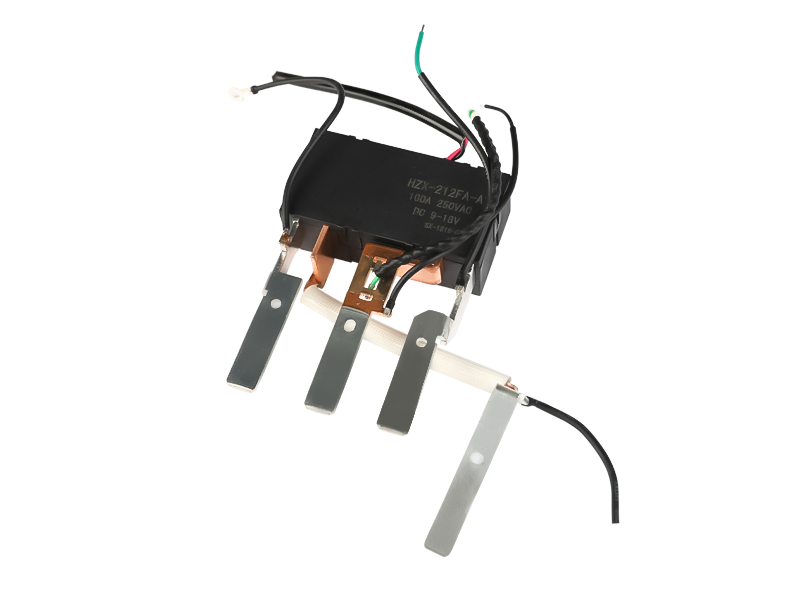
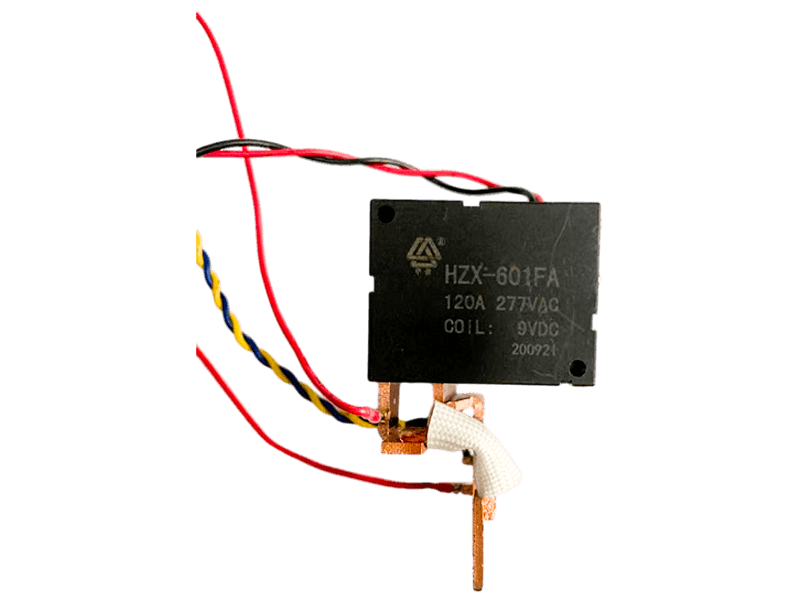
For example, the 100A 250VAC magnetic latching relay demonstrates how relays can handle high-current environments while maintaining minimal power usage. This balance between efficiency and performance makes it highly valuable for energy-sensitive systems.
While efficiency is a priority, safety remains critical in relay design. The important parameters is the 7mm creepage distance, which provides sufficient insulation to prevent arcing and breakdown in high-voltage conditions.
Combined with compact magnetic circuit design, this safety feature enhances reliability, improves response times, and ensures stable performance even in complex industrial environments.
The magnetic latching relay is increasingly used in smart technologies due to its low power consumption and reliable switching performance.
The magnetic latching relay for smart meters provides stable high-current control, even during power outages. By holding its last state, it supports efficient load management across entire grids.
Lighting, HVAC, and security systems benefit from low power latching relays, as they reduce standby consumption and extend device longevity.
In manufacturing and automation lines, bistable magnetic relays offer rapid switching and long-term stability, ensuring energy savings while reducing component wear.
As industries move toward smart and sustainable energy systems, several trends are shaping the future of magnetic latching relays:
The rise of energy-efficient latching relays is more than a technological improvement—it is reshaping the electrical control industry. Demand is growing across sectors such as smart meters, renewable energy systems, and building automation.
Manufacturers are focusing on innovations in contact durability, magnetic circuit efficiency, and material optimization to meet global requirements for performance and lifespan. As a result, the magnetic latching relay is expected to remain at the center of next-generation power and automation systems.
A Core Component for the Future
The magnetic latching relay stands out as a symbol of efficiency and reliability in modern electrical engineering. From the 100A 250VAC magnetic latching relay supporting high-current control, to the 7mm creepage distance ensuring safety in demanding applications, this technology is setting new industry benchmarks.
Looking forward, its adoption will continue to expand in smart grids, industrial automation, and energy-efficient buildings, confirming its role as a cornerstone of sustainable electrical infrastructure.


Copyright © 2015-2021, Zhejiang Zhongxin New Energy Technology Co., Ltd. All rights reserved Technical Support:Smart cloud Electromagnetic Relay Manufacturers China Relays Factory


 English
