
Most relays burn power the entire time they hold a contact closed. A magnetic latching relay does not, which is exactly why it shows up in smart meters, battery systems, and any design where standby power actually matters. Here is how the technology works and what to check before specifying one.
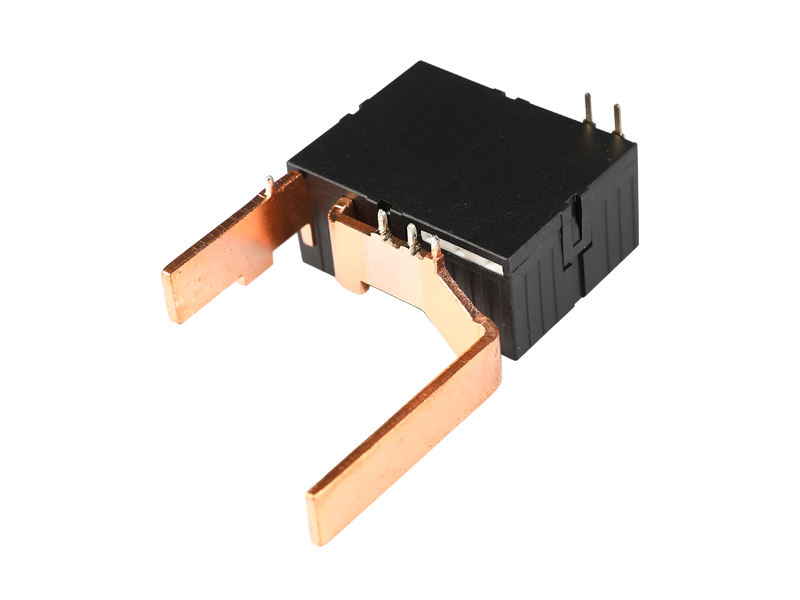
Magnetic latching relays are electromagnetic switching components that use a permanent magnet to hold their contact position after a short control pulse, rather than requiring continuous coil power like a conventional relay. Once switched, the relay stays in position on its own until a reverse pulse changes it back.
Definition: A magnetic latching relay is an electromagnetically actuated switch that uses permanent magnetic force to maintain its contact state after activation, requiring power only during the brief moment of switching.
That distinction matters most in battery-powered or standby-heavy systems. A conventional relay holding a circuit closed for hours draws current the entire time; a magnetic latching relay draws current only for the pulse, then holds the state passively until told to switch again.
The switching sequence is short, but each stage determines how reliably the relay holds its state afterward.
The two technologies trade upfront cost against long-term energy efficiency.
Requires continuous coil power to hold a contact closed, resulting in higher ongoing energy use and thermal stress, though the initial purchase cost is typically lower.
Holds its state with near-zero standby power and lower thermal stress, trading a higher initial cost for reduced operating cost and less frequent maintenance.
Application priorities shift depending on how power-sensitive or switching-frequent the system is.
| Smart Energy Meters | Electricity meters, smart grid equipment | Reduces standby consumption in always-on metering hardware |
| Industrial Automation | PLC systems, control panels | Provides reliable switching accuracy in automated processes |
| Renewable Energy | Solar systems, battery management | Minimizes energy losses in continuous power switching |
| Automotive and EV Systems | Battery control, charging equipment | Supports efficient, low-loss electrical control |
| Electrical Appliances | Smart home and consumer devices | Improves standby efficiency in always-connected products |
Before specifying a magnetic latching relay for a project, evaluate the manufacturer's testing rigor as closely as the datasheet numbers.
Match the relay to your load and switching profile first. Coil voltage, contact configuration, and switching capacity should be verified against your actual circuit design, not assumed from a general-purpose part number.
Before ordering, confirm the coil voltage matches your control circuit, the switching capacity covers your load current, the mechanical life rating fits your switching frequency, and the supplier can document endurance test results.

Copyright © 2015-2021, Zhejiang Zhongxin New Energy Technology Co., Ltd. All rights reserved Technical Support:Smart cloud Electromagnetic Relay Manufacturers China Relays Factory


 English
