
In modern electrical and electronic systems, efficiency, reliability, and energy conservation are increasingly critical design considerations. Among the components that support these goals, the magnetic latching relay has gained significant attention due to its unique ability to maintain its switching state without continuous power supply. Unlike conventional relays that require a constant current to remain energized, a magnetic latching relay operates using a bistable mechanism, allowing it to “remember” its position even after power is removed.
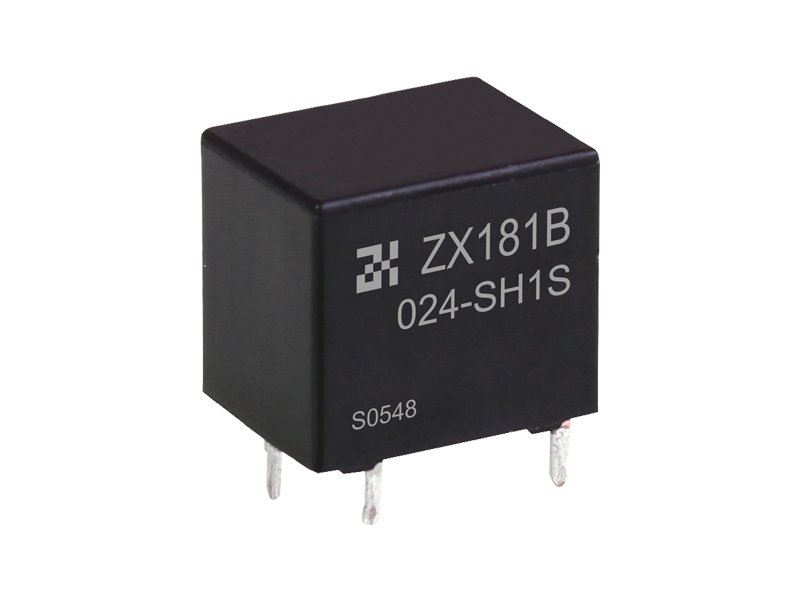
A magnetic latching relay is an electromechanical switching device that uses a magnetic field to change and maintain its contact position. Once actuated, the relay remains in its last state (either open or closed) without requiring continuous electrical power.
This behavior is achieved through the use of a permanent magnet or residual magnetism within the relay structure. As a result, the relay consumes energy only during the switching process, making it highly energy-efficient.
| Feature | Description |
|---|---|
| Bistable Operation | Maintains position without continuous power |
| Low Power Consumption | Energy is used only during switching |
| Mechanical Stability | Resistant to power interruptions |
| Long Service Life | Reduced coil heating extends lifespan |
| Compact Design | Suitable for space-constrained applications |
A typical magnetic latching relay consists of several essential components that work together to enable its unique functionality.
| Component | Function |
|---|---|
| Coil | Generates magnetic field when energized |
| Armature | Moves in response to magnetic force |
| Permanent Magnet | Maintains the armature position after actuation |
| Contacts | Open or close the electrical circuit |
| Spring Mechanism | Provides mechanical balance and return force (in some designs) |
The integration of a permanent magnet distinguishes the magnetic latching relay from traditional relays, allowing it to maintain its state without continuous էնergization.
The working principle of a magnetic latching relay is based on magnetic polarity and bistable switching. It typically operates in one of two configurations: single-coil or dual-coil design.
In a single-coil magnetic latching relay, the direction of current flow determines the switching state.
In a dual-coil configuration, two separate coils are used:
This design eliminates the need to reverse current direction and simplifies control circuitry.
| Parameter | Single-Coil Design | Dual-Coil Design |
|---|---|---|
| Control Method | Reverse current direction | Separate set/reset signals |
| Circuit Complexity | Moderate | Simpler logic control |
| Energy Efficiency | High | High |
| Reliability | High | Very High |
Magnetic latching relays offer several advantages over conventional relays, particularly in applications where power efficiency and reliability are critical.
Because a magnetic latching relay does not require continuous current to maintain its state, it significantly reduces energy consumption. This makes it ideal for battery-powered and energy-sensitive systems.
Traditional relays generate heat due to continuous coil energization. In contrast, magnetic latching relays only generate heat during switching, improving thermal performance and system stability.
The ability to maintain position during power outages ensures operational continuity. This feature is particularly valuable in safety-critical and remote applications.
Lower thermal stress and reduced electrical wear contribute to a longer service life compared to standard relays.
Despite their advantages, magnetic latching relays also present certain limitations that must be considered during system design.
Single-coil designs require polarity reversal, which may complicate circuit design. Engineers must ensure proper control logic to avoid unintended switching.
External magnetic fields can potentially affect relay operation. Proper shielding or placement may be necessary in environments with strong electromagnetic interference.
Magnetic latching relays may have a higher initial cost compared to traditional relays. However, the long-term energy savings often offset this difference.
The versatility of magnetic latching relays makes them suitable for a wide range of applications across different industries.
| Industry | Application Example |
|---|---|
| Smart Metering | Power consumption monitoring systems |
| Industrial Automation | Control circuits and safety interlocks |
| Home Automation | Lighting and appliance control |
| Renewable Energy Systems | Solar and battery management systems |
| Telecommunications | Signal switching and remote control |
In these applications, the magnetic latching relay contributes to improved efficiency, reduced energy usage, and enhanced system reliability.
Choosing the right magnetic latching relay requires careful evaluation of several technical parameters.
| Parameter | Consideration |
|---|---|
| Coil Voltage | Must match system power supply |
| Contact Rating | Should handle required current and voltage levels |
| Switching Speed | Important for time-sensitive applications |
| Mechanical Life | Determines durability under repeated operations |
| Environmental Rating | Resistance to temperature, humidity, and vibration |
Selecting the appropriate relay ensures performance and longevity in the intended application.
The magnetic latching relay represents a significant advancement in relay technology, offering a combination of energy efficiency, reliability, and long service life. Its ability to maintain state without continuous power makes it an ideal choice for modern electrical systems that prioritize sustainability and performance.
By understanding its working principle, structure, and application scenarios, engineers and system designers can effectively leverage the benefits of magnetic latching relays in a wide range of industries.
1. What makes a magnetic latching relay different from a standard relay?
A magnetic latching relay maintains its state without continuous power, while a standard relay requires constant energization to hold its position.
2. Is a magnetic latching relay suitable for battery-powered devices?
Yes, its low power consumption makes it highly suitable for battery-operated systems.
3. What is the difference between single-coil and dual-coil designs?
Single-coil relays use current direction to switch states, while dual-coil relays use separate coils for setting and resetting.
4. Can magnetic latching relays handle high current loads?
They can handle moderate to high loads depending on their contact rating, which must be selected based on application requirements.
5. Are magnetic latching relays affected by external magnetic fields?
Yes, strong external magnetic fields may influence operation, so proper shielding or placement is recommended.

Copyright © 2015-2021, Zhejiang Zhongxin New Energy Technology Co., Ltd. All rights reserved Technical Support:Smart cloud Electromagnetic Relay Manufacturers China Relays Factory


 English
